

Travelers often look for things to know before visiting Morocco, especially when the goal is to move beyond the must-see highlights and understand what Moroccan culture is like on a daily level. To help with that, this guide features insights from a guest writer, Ulysse, who traveled slowly through Moroccan towns, villages, and family homes. His experience offers a first-hand look at Moroccan traditions and customs, food culture, and practical tips for traveling — all useful for anyone preparing a first visit.
Table of Contents
Why Should You Try to Dive into Moroccan Culture?
During my slow travel itinerary in Morocco, I tried my best to understand and immerse myself in Moroccan culture. Why? I believe that this is one of the keys to creating unforgettable and authentic travel experiences wherever you are.
By letting go of stereotypes and exploring with an open mind, the chances of getting further than just scratching the surface of your destinations drastically increase. Yeah, I could have stayed in my comfort zone, stayed with foreigners only, and stuck to the must-see attractions.
After a month in Morocco, I am glad I chose to immerse myself in the local Moroccan culture. I’ve experienced things I would not have imagined otherwise, met Moroccans and witnessed their warm hospitality and traditions, and travelled off the beaten path in Morocco.
All of these are reasons why you should embrace Moroccan culture, with its pros and cons. Let me guide you in preparing yourself for this foreign culture and immersing yourself in Moroccan traditions and customs.

What Can You Expect From Moroccan Traditions and Customs?
Before we dive into some tips about how to immerse yourself in Moroccan culture, let me give you a quick overview of what you can expect from Moroccan traditions and customs. The fact is, as foreigners, whether in Europe, America, or Asia, African norms and cultures can be very different.
However, don’t worry! If you are prone to the slow travel mantras and plan to stay more than a few days, you will quickly get used to it. As part of the Arabic world, Morocco has certain customs and traditions every visitor should respect.
Obviously, most big cities are used to tourists and will not be offended if you go off the rails unconsciously. But, when it comes to small villages, not crossing the line and adapting to traditions is always good and respectful.
Planning adventures across Morocco? Check out this Morocco Road Trip Itinerary for route ideas and practical tips on driving between cities.
The Hospitality
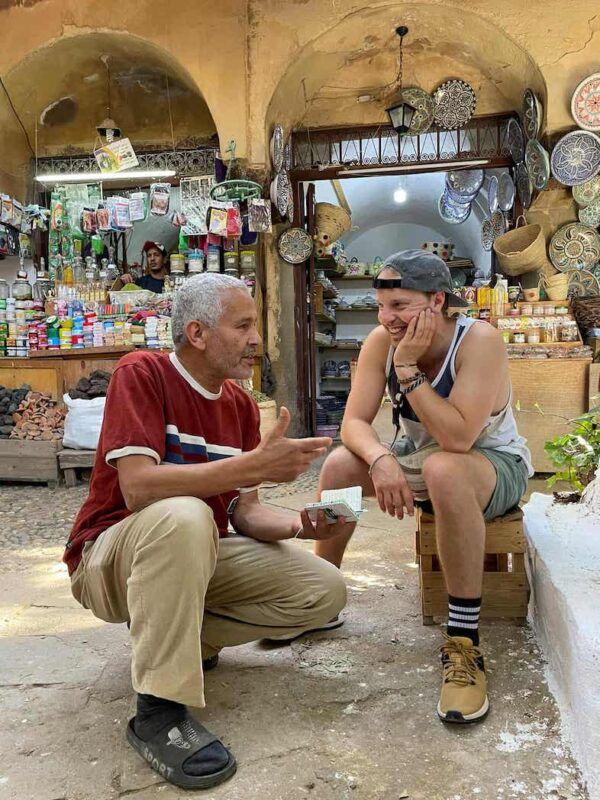
Moroccan hospitality is one of the best worldwide. After spending a few weeks wandering the country, I can confirm that it is no joke, and it might surprise you more than once.
Whether it’s about being invited for lunch, to share a cup of hot mint tea, or simply to show you around, Moroccans are very friendly. However, be careful because a minority use this reputation to build scams, and I advise you to rely mostly on old people, women, or family.
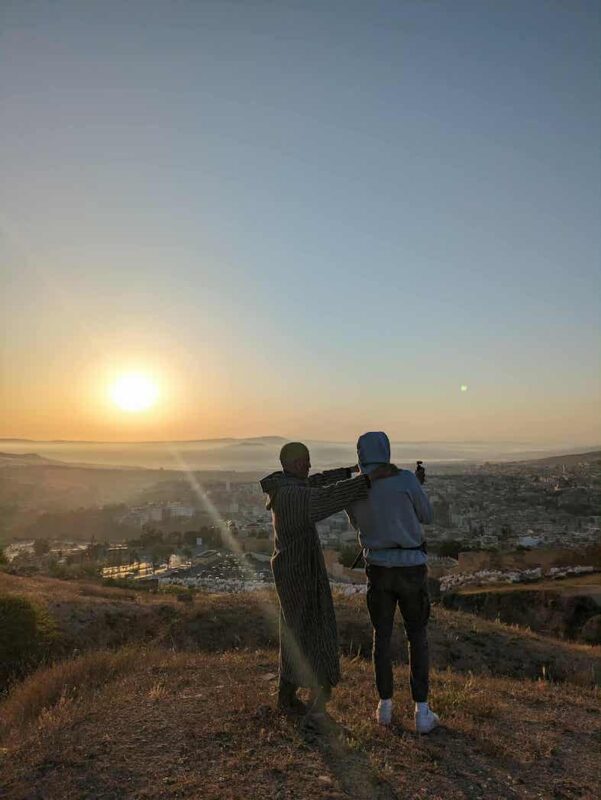
Here is a personal story illustrating this hospitality perfectly. Upon arrival in Morocco, as I was crossing the Strait of Gibraltar, a Moroccan named Aziz came to me and we started to talk. I soon realised I was arriving at Tanger MED instead of Tanger city and felt lost, without any local currency or a SIM card.
He spontaneously offered to guide me to the nearest taxi stop, and step by step, ending up paying for the taxi ride, my lunch, and a SIM card, accepting nothing but a picture together as compensation.
Lively and Loud Interactions
This one might leave you stunned if you are not used to loud environments. In Morocco, it is usual for people to be outside and interact loudly. I am not talking about yelling or any kind of fight, but the way it is in daily life.
It might feel a bit strange at first, but after some time, I came to miss this loud and lively atmosphere. It adds a very human quality to the streets, making every area a place for meetings and memories.
Differences in Gender Roles
Historically, Moroccan society has been patriarchal. There was a clear difference in gender roles, and men are often viewed as providers and decision-makers, while women are expected to manage the home and family. However, although it is still true, it tends to change slowly.
There’s a growing movement for gender equality, driven by activism, social media, and government reforms. Moroccan women are increasingly visible in politics, business, and the arts, challenging traditional gender expectations. But, even as Morocco transitions, certain behaviors and dress codes are still expected from women, whether foreign or local.
Family-Centered
Families are super important for Moroccans. They will always make them pass first, and although it seems logical, I noted some differences with Western traditions. In Morocco, it is normal to live in the family house until you get married, which can go up to 30 years old for some people. Then, it is also not rare that the adults take care of their parents, and the concept of retirement homes doesn’t really ring a bell there.
However, this strong relationship maintained throughout their lives leads to incredible moments. If you have the chance to see family life from the inside, as I did in Tamraght, you will see how meals are shared and how support and love are shown in everyday life.
Importance of Religion (Prayers, Ramadan, etc.)
Religion is one of the key pillars in many Moroccan lives. Islam is the most common religion in Morocco and has deeply shaped the local customs and traditions over time. Therefore, it is crucial to take it into consideration when visiting Morocco as a foreigner.
Every day, you will witness a pause within the day five times where believers pray, where they are or in a mosque. These five daily prayers (known as Ṣalāh or Ṣalāt, صَلَاة) form the foundation of a Muslim’s spiritual discipline and connection with their God, Allah. You can hear the Muezzin (equivalent of the bishop), and the prayers behind diffused through speakers all over town.
Tips for Preparing Your Cultural Immersion in Morocco


How to Respect Moroccan Culture and Traditions
Now, you are quite knowledgeable about the different Moroccan traditions and customs you will cross along your journey. Then, it is time to give you a few tips to prepare for your cultural immersion in Morocco.
The following aren’t blueprint guidelines everyone should follow, but almost. By not integrating them into your journey preparation and being aware of them, your travel to Morocco could take a different turn.
It is highly important to respect these norms and traditions, as it can seriously offend any Moroccan who invites you to their home or shares lunch with them. So, keep your eyes wide open for some tips to respect Moroccan culture and traditions.
Dress Consequently
Unfortunately, in Morocco, women and men still do not dress the same way. Although most touristic cities like Rabat and Marrakech are more progressive and understand the cultural differences between them and foreigners, dressing consequently is a step toward cultural immersion.
For women, favouring long skirts or loose trousers and tops covering the shoulders is ideal. When visiting religious sites or rural villages, a light scarf is useful, where dressing conservatively is expected. For men, especially in rural villages, long trousers and a simple shirt work best.
Want a dive into the Red City itself? This Marrakech Travel Guide covers the best neighborhoods, markets, and experiences.
Respectful Greetings
In Morocco, the greetings say a lot about how respectful you are. In contrast to Europe, they are longer, warmer, and often more expressive than what most travellers are used to. A simple “Salam Alaikum” (peace be upon you), although already good, is even better if followed by multiple inquiries about family or health.
This applies, of course, mostly when you already know the person, but a warm smile never lets you down. These heavy greetings reflect genuine care and respect, key elements of Moroccan traditions.
Table Etiquette in Morocco
If you are ever invited to share food with Moroccans, here are some table etiquette rules to respect. Meals often revolve around one large dish placed in the centre of the table, meant to be shared. It’s very important to eat with your right hand, using bread to scoop rather than a fork. The left hand? It’s considered impolite and dirty.
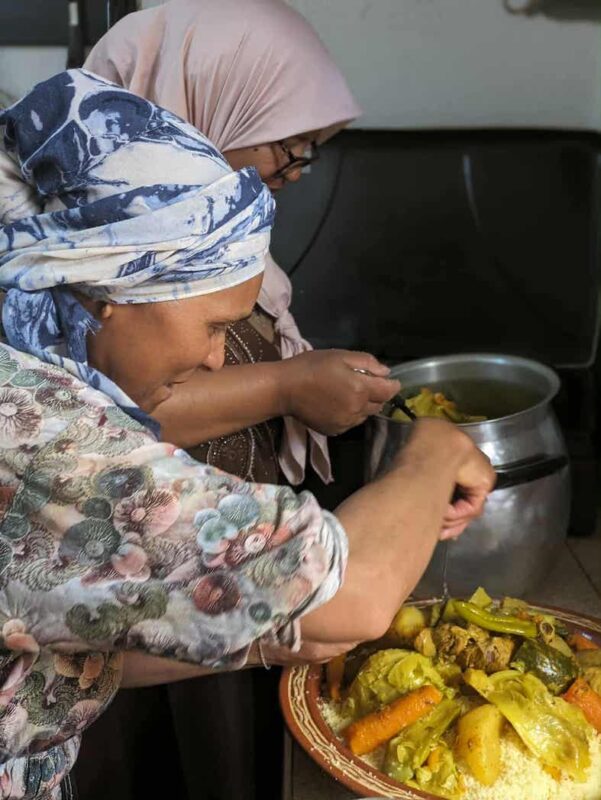
Plus, before eating, always wait for the host to begin and say “Bismillah” (in the name of God). For example, amongst the best things to do in Fes, one was to participate in a cuisine class led by three local women, going to the market with them, cooking, and sharing a big plate together later on.
Watch Out for Words About the King
Yes, in case you don’t know it yet, Morocco is a monarchy. The king rules over the country and has most of the powers to decide. He is one of the most important figures wherever you are in Morocco and doesn’t like to be criticised.
I’ve heard many stories about people ending up in jail because bad words about the king came out of their mouths. Therefore, ensure being in a closed space or being really quiet if you ever want to do the same.
Do Not Drink Publicly
Here’s a golden rule you shouldn’t forget when travelling to Morocco, my friend: never drink alcohol publicly. While the country welcomes you with open arms, it remains guided by Islamic values. Thus, drinking is considered disrespectful and a sin, even more so when done publicly.
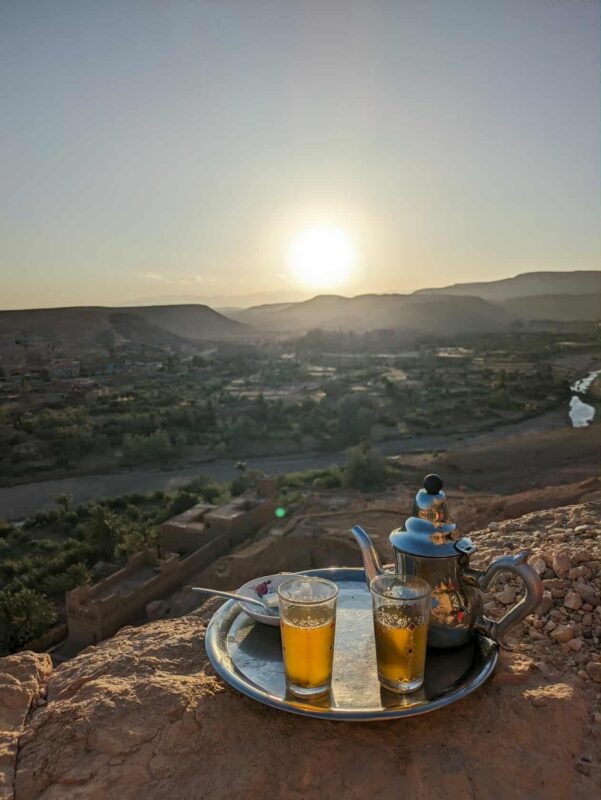
However, don’t worry. Yes, you’ll find alcohol in some riads, hotels, or tourist restaurants. But stepping out with a beer in hand is out of the question. Instead, join locals for a mint tea or coffee. It gives a break to this alcohol culture we have in Europe, which is honestly really great.
My Personal Stories in Moroccan Culture
Living and Volunteering With a Moroccan Family in Tamraght
During my month-long travel in Morocco, I had the opportunity to stay and live with a Moroccan family. During the last weeks, I stumbled upon a family-run hostel in Tamraght and ended up staying way longer than expected.
My three-day stay quickly changed into a week plus volunteering, and it gave me the opportunity to learn about Moroccan customs and traditions. During this time with them, I learned how to cook a proper tagine, understood the meaning behind each prayer, and listened to indelible local legends.
I believe that living with locals is a key to immersing yourself in Moroccan culture. It gave me a new perspective on many things, including the economic and political situation of Morocco for its inhabitants. I explored the village of Tamraght through the eyes of a local Moroccan, and it was overall an amazing travel experience.
Final Tips for Your Travel to Morocco
Here you are, ready to undertake a wonderful journey into an amazing country. Whether you are planning to backpack through Morocco, stay in local homestays, hostels, or the middle of the desert, this newly gained knowledge will help you in many ways.
Having the will to dive into a place’s traditions and customs opens new doors of horizons and perspectives you would not have imagined before. In Morocco, it shows you the warmth of locals’ hearts, reveals hidden gems, and creates authentic travel experiences.
Therefore, for your next trip, let curiosity guide your steps and an open mind act as your compass. By having these values in your backpack, you are sure to connect with your surroundings and unveil the unique essence of each destination.
Bon voyage!
Wander with Purpose – Connect with Heart.
About the Author
Hey, I’m Ulysse, A Slow traveller and the voice behind this article. I run SlowSightSoul where I share my adventures into a world of thoughtful and slow exploration. Have a look 🙂
