Casablanca is often treated as a gateway rather than a destination. Many travellers arrive or depart from here as part of a wider tour of Morocco’s imperial cities, stopping only to visit the Hassan II Mosque before moving on. That brief encounter rarely does the city justice.
Casablanca is a place worth lingering in, shaped by the Atlantic Ocean, by the legacy of the French Protectorate, and by bold post-independence ambition. Here you experience a different side of the country, far from postcard stereotypes. You can breathe the rhythm of everyday Morocco, walk along the Atlantic coast, and admire striking Art Deco buildings that tell the story of a modern, evolving city.
This post contains affiliate links to products and services, which help us earn a small commission at no extra cost to you. This helps to fund this blog and to bring more great publications to you. For more information, please see our Disclaimer page.
Table of Contents
Getting Around Casablanca: Neighbourhoods, Landmarks and First Impressions
On the drive from the airport into the city, you immediately realise that traffic in Casablanca is busy and constant. If you are arriving from smaller Moroccan towns, the scale of the city can feel overwhelming at first. Wide avenues, dense neighbourhoods and an almost uninterrupted flow of cars give the impression of a place that never really slows down. Despite this, Casablanca is easier to explore than it seems, especially if you approach it by neighbourhoods and themes rather than trying to see everything at once.
The Hassan II Mosque anchors the city both spiritually and symbolically, while local markets and neighbourhood cafés reveal everyday rhythms that rarely appear in guidebooks. Along the coast, the Corniche reveals Casablanca’s deep connection with the Atlantic, offering open views, sea air, and a more relaxed pace. The city centre, often referred to as Centre Ville, is home to one of North Africa’s most interesting collections of Art Deco architecture. The heart of the city is dotted with elegant façades, curved balconies, and decorative details.
This is exactly why Casablanca stayed with me. Less polished and far less touristic than other Moroccan cities, it felt more authentic to my own experience of Morocco, a modern place where everyday life unfolds naturally, without being staged for visitors.
TIP: If you’re booking a stay in Casablanca, look beyond the big chain hotels and consider a riad-style accommodation. A riad is a traditional Moroccan home built around a peaceful inner courtyard, which gives it a calm and intimate feel. If you’re curious, have a browse through the riad options in Casablanca and see which places catch your eye.
The Hassan II Mosque in Casablanca: Visiting Morocco’s Iconic Oceanfront Landmark
The most famous attraction in Casablanca is the Hassan II Mosque. Rising directly above the Atlantic Ocean, it is one of the largest mosques in the world and the most important religious site in Morocco that non-Muslims are allowed to enter. Its position alone makes it extraordinary, with waves breaking against the rocks beneath the prayer hall and the ocean forming part of the mosque’s visual and symbolic landscape.
The scale is striking. The minaret, over 200 metres high, dominates the skyline and is visible from many parts of the city. What makes the mosque truly remarkable, however, is the craftsmanship. Intricate zellij tilework, carved cedar ceilings, and hand-finished marble surfaces were created by thousands of Moroccan artisans, using traditional techniques passed down through generations. Every detail reflects a deliberate effort to showcase the country’s artistic heritage at its highest level.
The interior can only be visited on guided tours, which take place several times a day. From personal experience, joining one is absolutely worth it. Inside, you gain a deeper understanding of Islamic architecture, Moroccan decorative arts, and the symbolic role the mosque plays in contemporary Morocco, far beyond its monumental appearance.
Beyond the building itself, the setting is unforgettable. Standing on the vast esplanade, with the Atlantic below and the city stretching behind you, gives you a clear sense of Casablanca’s identity as an ocean-facing metropolis. One of the city’s best-kept secrets lies beneath the mosque: an extraordinary hammam, often mistaken for the ablution rooms. With a separate entrance, it offers an authentic experience of steam, heat and traditional massage, far removed from the hurried visits of passing tourists.

Private Tour of Casablanca with Hassan II Mosque EntryIf you want to see Casablanca without the stress of getting around, a private tour is ideal. You’ll have a driver and car for a few hours to visit the Hassan II Mosque (ticket included), explore the medina, and stop at spots like United Nations Square, Rick’s Café, and the Royal Palace. It’s an easy, comfortable way to see the highlights — take a look at the tour details and book your spot.
Casablanca Corniche Walk: Atlantic Views, Cafés and Local Life
Casablanca’s Corniche offers a very different atmosphere from the city centre. Here, the Atlantic sets the pace and the city seems to breathe more slowly. Long promenades run alongside the ocean, lined with cafés, beach clubs, and restaurants that face directly onto the water.
You can easily start your walk near the Hassan II Mosque and follow the coastline towards the lighthouse, discovering a side of Morocco that feels modern, open, and surprisingly European. This is not the Morocco you usually see on classic tourist itineraries, yet it is very much part of the country’s present.
Along the Corniche, everyday life unfolds at a relaxed pace. Locals come here to fish during the day, while in the evening the promenade fills with couples, friends, and families enjoying the cooler air after sunset. Weekends are especially lively, with children playing, street vendors appearing, and cafés staying busy well into the night.
Sitting at a seaside café, watching the Atlantic roll in while the city moves around you, offers a clear insight into Casablanca’s contemporary lifestyle. The Corniche is where the city meets the ocean, and where its modern identity becomes most visible.
Art Deco Casablanca: Exploring the City’s 20th-Century Architecture
One of the main reasons I returned to Casablanca and dedicated an entire trip to this city, after my first road trip through Morocco’s imperial cities, was its architecture. Casablanca is home to one of the largest collections of Art Deco buildings in the world, yet many visitors barely notice it as they rush through the city.
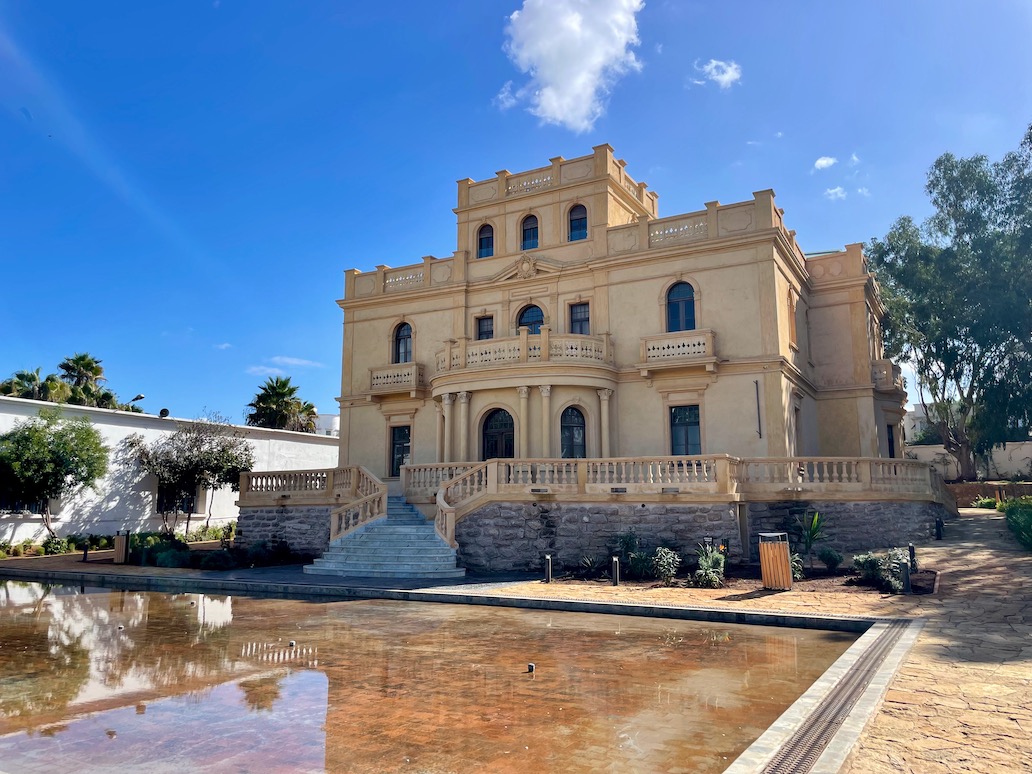
During the French Protectorate, particularly between the 1920s and 1940s, Casablanca became a laboratory for modern urban planning and architectural experimentation. You can understand this period more deeply by visiting lesser-known places such as Villa Carl Ficke, a small and often overlooked museum that helps put the city’s architectural evolution into context.
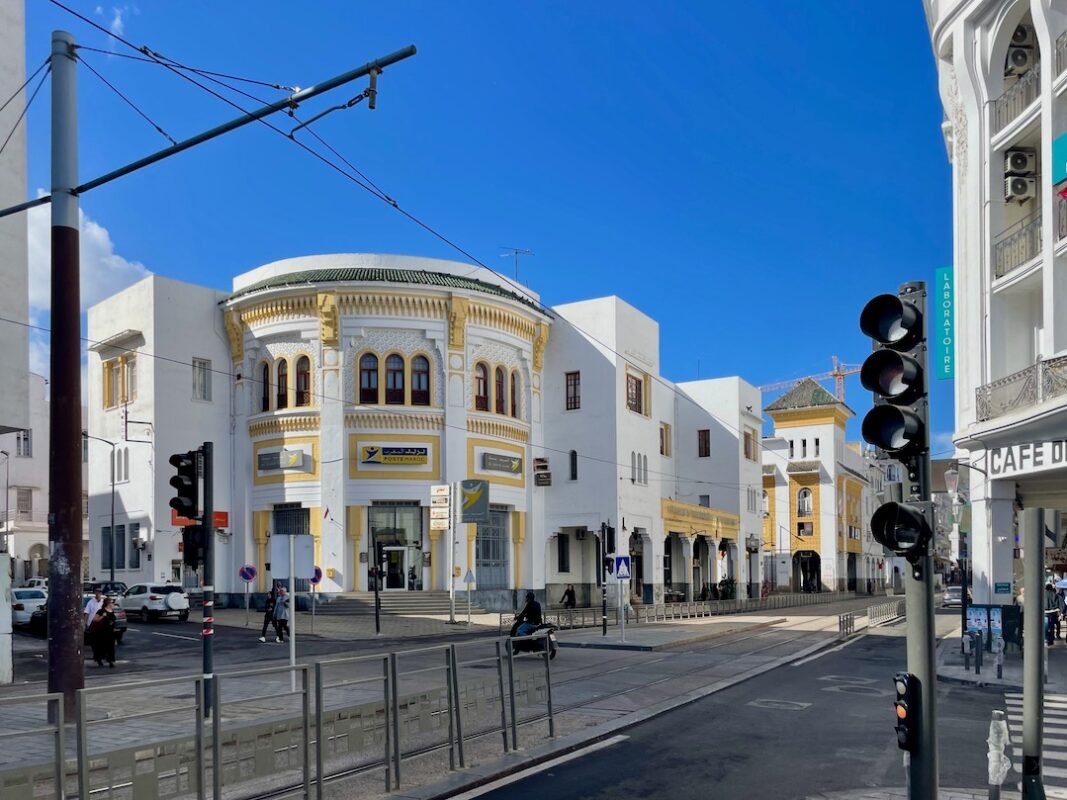
Walking through areas like Boulevard Mohammed V and the streets around Place des Nations Unies, you encounter buildings defined by curved balconies, geometric patterns and elegant façades that blend European modernism with Moroccan decorative elements. The Rialto Cinema is perhaps the most photographed example, but it is far from the only one. Simply lifting your head as you walk through the city centre reveals magnificent buildings that are often forgotten or taken for granted.
Some façades have been restored, while others show the marks of time, worn and weathered by decades of urban life. Together, they tell the story of a city that, in the early twentieth century, was looking decisively towards the future. Exploring Casablanca’s Art Deco architecture offers a different perspective on Morocco, one rooted not in ancient history, but in modern ambition and cultural exchange.
Casablanca Markets and Food Scene: Medina, Central Market and Local Cafés
While Casablanca does not have a medina on the scale of Fes or Marrakech, it offers plenty of opportunities to observe everyday Moroccan life without the intensity of major tourist hubs. The medina here is relatively small, and it feels noticeably less touristic. You won’t be pressured into buying something, and prices tend to be more honest than in places like Marrakech, where the medina has become the perfect setting for selling heavily overpriced souvenirs.
During the day, this part of the city feels lived-in rather than staged. You can sit alongside locals and eat freshly fried fish in simple restaurants, where the focus is on flavour rather than presentation. Meals are quick, informal, and deeply connected to the rhythms of the port and the nearby markets.
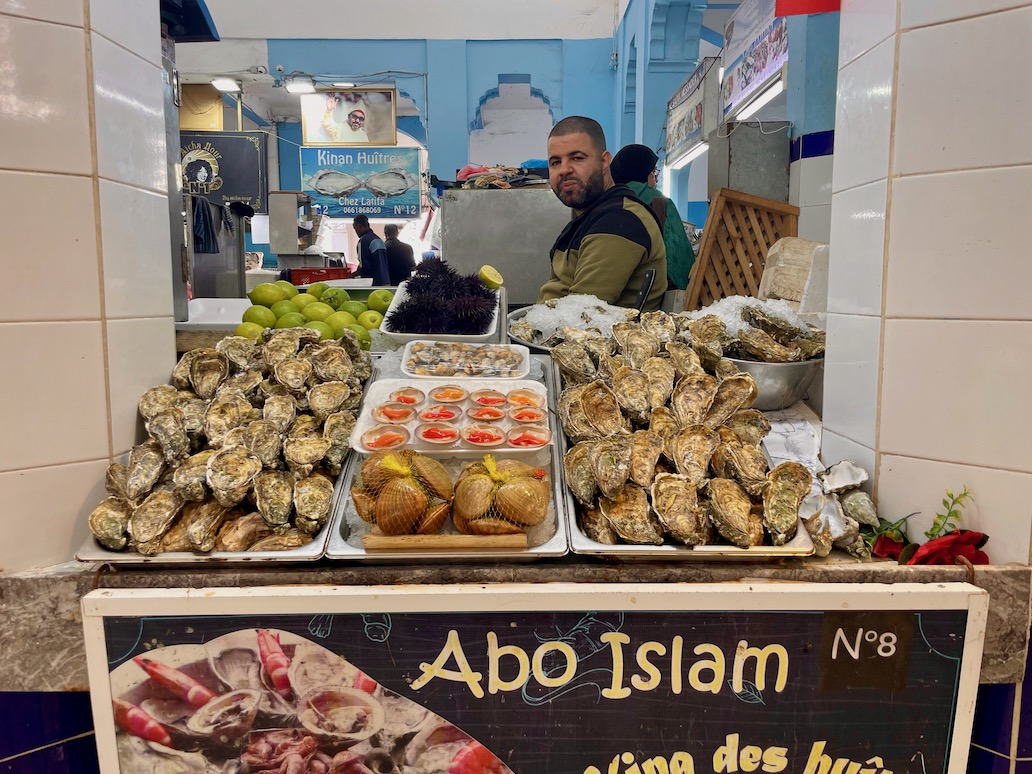
The Central Market sells mostly fish, alongside fruit, vegetables, olives, and spices. Here, food is very much at the heart of the experience. Behind the fish stalls, small eateries prepare seafood that has often been caught just hours earlier. Choosing your fish at the counter and then sitting down to eat it moments later is one of the most authentic food experiences you can have in Casablanca.
Nearby cafés offer the chance to slow down. Sitting with a mint tea or a strong coffee, watching daily life unfold around you, helps you understand the city beyond its landmarks. You may notice that not many women sit in traditional cafés, but Casablanca is far more westernised than you might expect and no one will comment or make you feel uncomfortable. This is Casablanca at its most genuine, unfiltered, and quietly memorable.
Casablanca Night Tour with Moroccan Dinner: If you want to see a different side of Casablanca, the night tour is a great pick. You’ll pass the medina, the Hassan II Mosque, the oceanfront at Ain Diab, and even a modern mall before ending the evening with a Moroccan dinner and traditional performances. It’s a relaxed way to enjoy the city after dark — check the tour details and reserve your spot.
Why Visit Casablanca: Modern Morocco Beyond the Imperial Cities
As you can see, Casablanca offers far more than a simple stopover on the way to more touristic destinations. This is a city where Morocco’s past and present meet directly, where global influences blend with long-standing traditions, and where everyday life unfolds at a pace that feels unmistakably urban.
The Hassan II Mosque, cafés lining the main boulevards, local markets and the Atlantic waterfront all leave a lasting impression. Visiting Casablanca adds real depth to any trip to Morocco. Once you move beyond first impressions, the city reveals itself as one of the country’s most interesting destinations, not despite its modernity, but precisely because of it.