

Written in 2020, amidst the global pandemic, and published in 2024, amidst the war in Ukraine.
I park in a small, suspicious lot at the port of Ochakiv, next to five or six other cars. Stepping out under the scorching September sun, I look around. I’ll admit, nine hours behind the wheel (the last 50 kilometers dragged on endlessly due to the pothole-ridden road) made me regret not having the option to buy a ticket to Portugal or Spain. Plane—taxi—straight to the beach—that would have been all the hassle.
But since going abroad wasn’t an option, I decided to take a gamble—to spend my vacation on the Kinburn Spit, a region not exactly tailored for tourism yet. However, what I had read in the rare posts from other travelers was enough to genuinely pique my interest.
Imagine miles of pristine beaches. Unique pink lakes. Dolphins swimming so close to the shore that it seems you could reach out and touch them. Picture also 60 hectares of fields filled with blooming orchids and a unique population of pink pelicans. Enough to take the risk, isn’t it?
And so, here I stand in the middle of an old, empty, slightly eerie parking lot at the port of Ochakiv. If the few witness accounts are to be believed, this is precisely where the “Gorich” barge departs twice a day towards the Kinburn Spit.

Table of Contents
The Barge “Gorich” and the People of Kinburn
From somewhere behind a garage, I hear the sound of a television. I walk over and find a small, old trailer where the parking lot employee spends his days watching daytime TV shows. The trailer is stuffy. A small fan, probably manufactured in the 1950s, struggles on—likely destined to keep running long after we’ve all passed away from old age.
The guard takes my 50 hryvnias (equivalent to 2 dollars)—payment for five days of parking—and writes down my car’s license plate number in a thick notebook. He lazily asks how Kyiv is doing—he last visited in the 80s when he was studying at a university in the capital. Without waiting for my full response, he waves towards the pier: “The barge will be here soon. Go wait.” So I do. The sun beats down mercilessly, despite it being September, and I’m grateful that there’s a sprawling tree and an old bench on this worn-out, ill-equipped pier. I take a seat.
The passengers, most of whom are over 50, slowly gather at the pier, and, much to the delight of the local stray dogs, they each take out their lunch—everyone, as if by agreement, has a sandwich with sausage.
The metal tub they call a barge pulls up at 2:00 PM, and no one but me seems to move! Indifferently eyeing the barge, people continue basking in the scorching sun and finishing their sandwiches. I even reread the faded name on the bow. It’s definitely “Gorich”! Why isn’t anyone heading towards the barge?
At 2:30, an elderly woman, who had the most sandwiches and the largest bag, stands up, turns to the group, and says, “Well, let’s go, I suppose.” And then I understand. They all know each other here! I’m the tourist. These people have been routinely commuting from the spit to the mainland and back, each going about their business, for many years.
“You shouldn’t have sat there,” says a man in a blue shirt to a woman in a striped top. “Come on, move over.” He then begins loading sacks of potatoes, about 25 of them, right into the center of the barge. “Should be enough for the winter,” the woman in the striped top remarks approvingly, not offended in the least at being asked to move. “And what’s in those boxes? Plums? For canning?”
“Galia, is someone meeting you there?” loudly interrupts a slim, elderly woman in a white headscarf and a colorful dress from the pier. An older lady already seated on the barge, surrounded by bags, looks up at her and says: “Who’s calling?” “It’s me, Vera! I’m calling! Have you gone completely blind?” “I might have, comes with age!” Galia happily confirms. “What do you need?” “You need to take this bag to the doctor,” the woman in the headscarf waves towards a package. “Will you take it? Is someone meeting you there?” “They are! ” Galia nods enthusiastically. “Yosypovych is meeting me. I’ll call him now. Hello! Yosypovych! I’m already on the ‘Gorich.’ Will you meet me?” “I’ll meet you,” replies an elderly man sitting on the neighboring bench. “Didn’t you see me board the barge?” “But I’m blind!” Galia turns to the woman in the headscarf and explains, as if the woman had been in another city during this conversation. “We’ll take your bag. Look, Yosypovych is right here; he’ll help.”
An hour later, at another pier, now on Kinburn, the crowd disperses. Each goes their own way. A smiling man stops me and another couple and says: “You’re clearly not locals. I suspect you need me,” and he points towards an unusual vehicle known locally as a “everywheregoes.” It’s a sort of Frankenstein—a truck cabin welded to a trailer, with tractor wheels attached. It’s the only thing that can drive on the sandy off-roads of Kinburn.
My goodness. I’ve travelled the world looking for adventures and all this time, they were so close. Just 500 kilometers from Kyiv.

Why Visit Kinburn?
Kinburn is a unique place on the map of Ukraine. Essentially, it is a cape that stretches 40 kilometers in length and 10 kilometers in width, situated between the salty Yahorlyk Bay and the freshwater Dnipro-Buh Estuary. The first mentions of this cape appear in ancient literature, when Kinburn was part of the ancient state of Hilea, described by the Greek historian Herodotus.
Back then, Kinburn was covered with dense forests. Looking at the miles of sandy beaches that the cape is famous for today, it’s hard to believe. The only remnant of Hilea’s time is the Volyzhyn Forest—ancient oaks, alders, birches, and pines, under whose shade it’s so pleasant to walk. Alongside these ancient trees grow 500 varieties of medicinal plants. Locals call Kinburn an open-air pharmacy.
Kinburn is also a protected area, home to 300 species of birds, including a unique population of pink pelicans. Fish come to spawn along the cape’s shores. The spit itself contains about 100-150 salty and freshwater lakes, as well as one of the largest wild orchid fields in Europe—60 hectares, no small feat.
Stepanych’s Auto-Fleet
It was these natural wonders that I was planning to fall in love with when I decided to explore the cape. But even more than the beauty of nature, my heart was won over by the community of locals. It’s no joke—there are only about 100 registered residents; the native population is less than 90. Everyone knows each other and lends a hand.
Summer on Kinburn is the busy season. People harvest their crops and stock up for winter. They travel to mainland Ukraine to sell their goods at markets, and they also host tourists. There aren’t too many travelers yet, due to the challenging journey between the cape and the mainland. The only water routes to Kinburn are the “Gorich” from Ochakiv and a speedboat from Mykolaiv. The road access ends at the village of Heroiske before entering Kinburn—there are no asphalted (or any other) roads beyond the village.
Winters on the cape are harsh. Storms frequently cut off communication with the mainland. Strong winds from the sea regularly bring down power lines, leaving people without electricity for days. In these winter months, the Kinburn community relies on each other. The people here are tightly knit.
All of this was explained to me by Viktor Stepanych, the star of the spit. A star in a rather unexpected way. He’s one of three drivers of public transport vehicles on Kinburn (another two are his sons). Viktor Stepanych’s phone number is everywhere on the internet. Without him, you simply won’t make it across the spit’s sands (as there are no other roads here).
Stepanych has been driving around Kinburn for over 35 years. During this time, he’s built an impressive fleet of extraordinary buses, assembled with his own hands, capable of handling the local off-roads, and he’s gathered a wealth of local stories.
For example, he told me why the asphalt road ends near Heroiske: “They started to lay the road further,” he says, “but then an environmental commission from Kyiv showed up. The construction was frozen for 25 years. As soon as a road appears here, the last untouched place in Ukraine, with its nature, bird nests, and wild beaches, will disappear.”
Speaking of beaches, the locals protect them from development as best they can. It seems that Kinburn really is the last place in the country with miles of pristine beaches that the residents refuse to give up to businessmen for resorts, hotels, and private villas.
The sights I had planned to see were scattered across different parts of the spit. Although the distances between them are about 30-40 kilometers, in terms of local off-road conditions, this translates to a few hours of travel to each stop. Fortunately, they are all on Viktor Stepanych’s route. He picks me up at an improvised stop near the house I’m renting at 7 AM. Viktor Stepanych is heading to the pier to meet newcomers from the mainland. I need to go a bit further—to the tip of the cape, where the salty waters of Yahorlyk Bay meet the freshwater of the Dnipro-Buh Estuary. The locals call the tip of the cape “the edge of the earth.”
“Alright,” Stepanych says as he drops me off, “Listen to me carefully. You’ve got about an hour until the boat with passengers from Mykolaiv arrives. It’ll take you about 20 minutes to walk to the edge of the earth. Spend a little time there, then head back. Don’t be late, I’m not planning to come back here again today.”
I jump into the warm sand and start walking towards the tip of the cape. Stepanych calls out to me: “And don’t even think about swimming at the very end of the spit! Three boys and their coach drowned there in the 80s! The whirlpools are deadly. Go on, go! I’ll save you a seat in the car.”
The Edge of the Earth
The sand crunches underfoot—a fine, light-yellow mix of tiny shells. I walk along the sea towards the “edge of the earth,” hardly able to believe how blue the water is here! The last time I saw the Black Sea this color was around 2013, in my beloved Crimea. Kinburn strongly reminds me of those places. I spent every summer in Crimea, and since the peninsula was annexed, I haven’t gone back. I miss it dearly.
Here on Kinburn, the travel season has already passed—empty sunbeds and closed beach bars fade into the background. There’s not a soul in sight. Ahead, the sandy strip of land narrows like an arrow towards the tip of the cape. A gentle breeze blows. Flocks of birds—there are so many of them here, like in a movie. And an overwhelming sense of freedom.
I reach the tip of the cape and forget to breathe out of sheer awe. Before me, the dark freshwater of the estuary clashes with the clear, salty waters of the bay. Where the two waters meet, they churn. It’s no wonder Stepanych warned me not to swim here—these two bodies of water are a force of nature! So I simply stand there, barely breathing. Alone, at this improvised “edge of the earth,” surrounded only by waves and birds. I’m glad I decided to come to Kinburn.

Pink Lakes and a Tomato Sandwich
Traveling along the sandy roads is quite an “adventure.” It’s only 38 kilometers from the “edge of the earth” to the salt lakes, but it takes a bumpy 2.5 hours. As I drove, I prayed that this spit would preserve its beauty for many more years. Let it stay like this, without civilization and good roads. At least the patient ones will have a place to reach wild and beautiful beaches.
With these thoughts, I wandered around the salt lakes. They’re not like those in the Kherson region. In May, they are flooded with salty water from the sea, and by September, the salt matures and is collected into kuguty—pyramids. There it stays for a while, turning a vivid pink! After that, it’s packaged and sold. Where the water has already evaporated, pink crystals glisten at the bottom of the lakes.
“What are you wandering around there for in silence?” Stepanych calls out. While the other few travelers (that came this morning by a speedboat) and I take photos, he’s sitting in the shade of a dump truck with two other men at an improvised table. “Come, I’ll introduce you to the foreman. He’ll tell you all about the pink salt.”
A smiling, sun-baked older man gets up as I approach. “I’ll tell you,” he says. “I’ll tell you everything now. But first, take a tomato, and a sandwich. Stepanych says you’ve been riding with him since 7 AM. You haven’t eaten anything, have you?”
I take the tomato, and he begins to talk. The local salt miners extract salt by evaporation—it’s the only place in Ukraine where this method is still alive. Salt farming has been practiced on Kinburn since the 16th century—back then, the Cossacks settled these lands, established a fort, and started salt production. Kinburn was one of the stops on the legendary Ukrainian Chumak route—a trade route where Chumaks, from the 16th to the 19th century, transported salt from the Black Sea coast of Crimea and the Sea of Azov, and brought back grain and other agricultural products from the central regions of Ukraine.
During the Soviet era, salt from Kinburn was exported to all the countries of the Union. Today, production is small. I would say, artisan. But that makes it no less impressive. I finish the sandwich the foreman offered me, thank him for the story, and get up. While Stepanych starts up his minibus, I still have a couple of minutes to wander between the mounds of pink salt crystals.

Unexpected Encounters
Stepanych’s minibus sways rhythmically from side to side, slowly inching forward along the sandy roads. I can’t help but think how beautiful this part of Ukraine is, with all its road-bound adventures. The only thing missing is the foreign backpackers. They would love it here—such an exotic place. But where would you find them in a year of pandemics and lockdowns? Especially at the end of September, when the season is long over?
I get into the minibus just as the boat from Mykolaiv arrives at the pier. The passengers board the bus, Viktor Stepanych closes the door, and we set off.
Suddenly, someone from the back seat yells, “Waaait!”
We all turn to see a guy with a backpack running through the sand, waving at us. We stop and open the door. He says in English: “Authentic Camp? I need to get to the Authentic Camp, please!”
Good grief. Where did he come from? Viktor Stepanych doesn’t speak a word of English, but of course, he knows all the local camps. The backpacker gets into the minibus. There’s a pause. Then one of the passengers finally sums up what we’re all thinking: “How did you end up here?” he asks in English.
The hapless American had set out on his journey three years ago. It’s a painfully familiar story, one you’ll hear in any hostel across Asia. He patiently saved up, then packed his bags and left. Until 2020, everything went according to plan: low-cost flights, hostels, the world as a kaleidoscope.
2020 caught him in Fiji.
“Several months,” he said. “Several months on an island. No flights, nothing to do on the coast for so long, it was maddening. I nearly went crazy. But I was lucky. I quarantined with a guy who had a layover in Fiji. He was supposed to spend just a few hours on the island before catching his next flight. He landed, and then all the other flights were canceled. He was stuck there for several months, too.”
On Fiji, there was also a sailor who couldn’t stop raving to the American about the beauty of Ukraine. So when the airport finally opened, the backpacker flew here.
How he managed the complex logistics of Kyiv-Mykolaiv-Kinburn in the off-season, when even the Ukrainian blogosphere offers scant information, is a mystery to the universe. But the backpacker couldn’t hide his excitement:
“Adventure!” he exclaimed, stretching out his arms. “New people!” He then started asking how everything worked around here.
They say another lockdown is coming in October. I hope the chap manages to leave the spit by then. According to the locals, winter here is far from the likes of Fiji.
P.S. As the Kinburn community endures occupation by Russian forces since 2022, this publication stands in solidarity with them. The authors of Through a Travel Lens blog hope to raise awareness and express our support for the community during these challenging times.
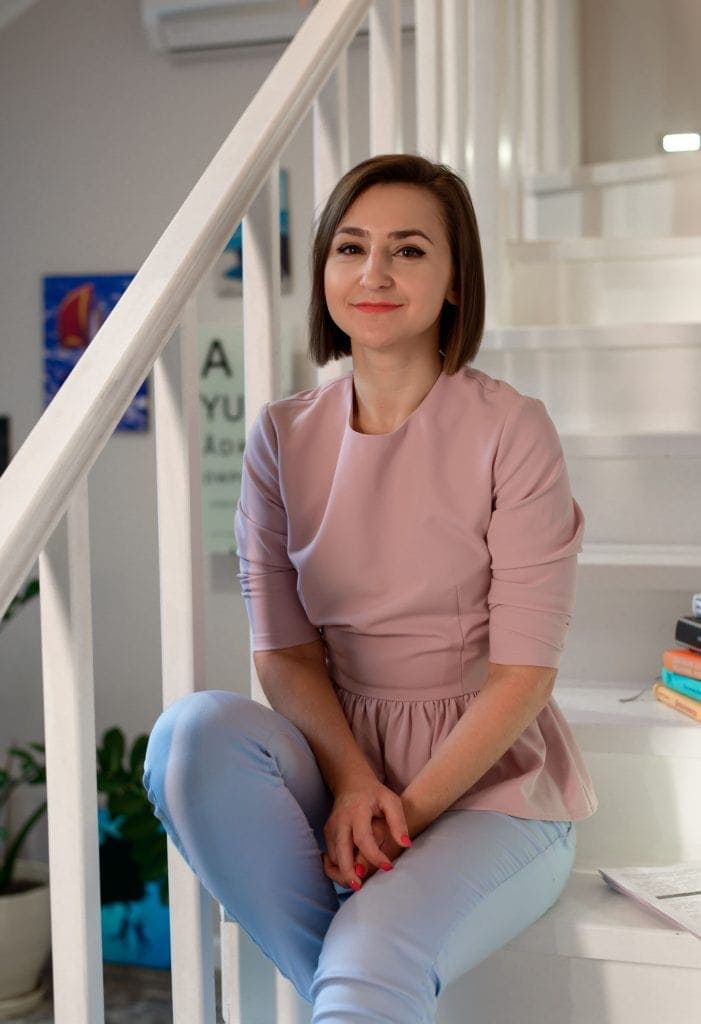
Written by Inessa Rezanova
I’m a travel writer, keen to see the world and share its stories. I’m Ukrainian, and I continue to explore my country even in times of full-scale invasion. Not just because I love it, but because I believe in showing the world the beauty, strength, and humanity that exists here, even now.
