

Venice in the summer is a riot of color, heat, and shoulder-to-shoulder crowds, but Venice in January? That is a different city entirely. As the holiday decorations come down and the Christmas crowds disperse, the “Floating City” transforms into a quiet, laid-back maze of old, cozy streets. This lasts only a little while, before travelers flood the streets ahead of the February Carnival, but it is worth experiencing.
Visiting Venice in January, in the dead of winter, requires a bit of grit and a pair of sturdy waterproof boots, but the rewards are unparalleled. Imagine crossing a nearly empty St. Mark’s Square and enjoying an unobstructed view of the Doge’s Palace. The long queues for the Basilica vanish, the prices of canal-side hotels drop, and the local bacari (wine bars) belong once again to the Venetians, who huddle inside over glasses of red wine and warm cicchetti.
Yes, it’s a bit chilly. Yes, you’ll need to thread your travel itinerary through the risks of Acqua Alta — tidal flooding that happens in Venice in autumn and winter. Yes, if you travel by car, it is still smart to leave it in Mestre and enter the “Floating City” by bus or train because, despite the low season, parking prices on the island remain steep.
But hey, I’ve navigated Venice in January twice, and both times I thoroughly enjoyed the visit. I’m here to share the things to do, places to visit, neighborhoods to stay in, and other things worth knowing if you are seriously considering traveling to Venice in winter.
This post contains affiliate links to products and services, which help us earn a small commission at no extra cost to you. This helps to fund this blog and to bring more great publications to you. For more information, please see our Disclaimer page.
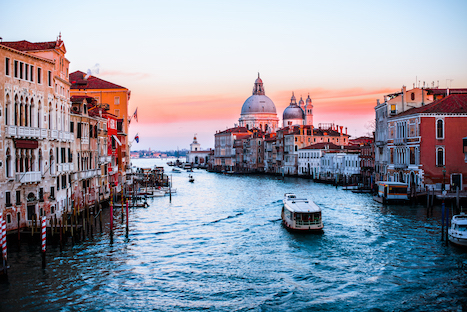
Table of Contents
How Cold Is It in Venice in January?
The best definition for January weather in Venice is “damp cold.” The temperature can hover around 7–8 °C, but the high humidity from the lagoon means the air often feels much crisper than the thermometer suggests. It gets colder at night, so a word of advice would be to look for accommodation that provides proper heating and has good windows or wooden shutters.
Acqua Alta — the high water — is real, and it is common in winter. Before the tide rises, the city’s sirens alert locals and visitors to this natural phenomenon. This has been happening for years, and the city is well prepared, with a network of elevated temporary walkways and other solutions designed to simplify movement during temporary flooding. Naturally, pedestrian movement slows down, but the absence of crowds in January makes getting around much easier.
Perhaps the most magical weather condition is the nebbia, the thick winter fog that periodically swallows the city. It is a heavy white blanket that obscures the tops of campaniles and turns the lagoon into a void.
Finally, while rain is moderate in January, it often takes the form of a persistent drizzle rather than a downpour. Snow is a rare event, but if you happen to be there during a dusting, you have hit the travel lottery. Seeing red-tiled roofs and black gondolas covered in white is an ethereal sight that few visitors ever get to witness.
When it comes to clothing, layers are your best solution. Bring a thick coat, a scarf and a hat, a pair of gloves, and warm shoes. Wellies can be a bonus if Acqua Alta catches up with you during your January visit, but they are also easy to buy locally if needed.

Things to Do in Venice in January
While the beach clubs of the Lido are closed for the winter season, the cultural and culinary heart of Venice beats just as passionately in January as it does the rest of the year. Here’s how to embrace the season:
1. Enjoy the “Empty” Museums and Churches
In summer, the Doge’s Palace and the Gallerie dell’Accademia are endurance tests of patience. In January, you can often stand alone before a Tintoretto or a Titian. Use this time to explore the Scuola Grande di San Rocco or climb St. Mark’s Campanile without a two-hour wait; the view of the mist-shrouded islands from the top is breathtaking.
Combine visits to Venice’s iconic landmarks with a gondola ride on this bestselling, highly praised guided tour.
2. A Warm Refuge: The Hot Chocolate Pilgrimage
Venice has a historic relationship with chocolate, and there is no better refuge from a drizzle than Caffè Florian or Caffè Lavena in Piazza San Marco. While expensive, sitting in these opulent 18th-century rooms with a cioccolata calda (so thick it’s practically a pudding) is a quintessential Venetian winter ritual. For a more local vibe, head to VizioVirtù in San Polo to sample artisanal truffles and spiced drinking chocolate.
3. Murano and Burano Winter Adventures
You can also use January to visit Murano and Burano, the colorful lagoon islands famous for Murano glassmaking and Burano’s bright fishermen’s houses and traditional lace. Both islands are open year-round and noticeably calmer in winter. They are best visited with a guided tour, which helps you understand the crafts, history, and logistics, and makes it easier to get the most out of a short trip.
4. The Bacaro Tour in Cannaregio
When the sun sets at around 4:30 pm, the city’s bacari (traditional wine bars) become the centers of life. Wander the streets of Cannaregio and hop from bar to bar, enjoying an ombra (a small glass of wine) and seasonal cicchetti like creamy baccalà mantecato (whipped cod) on crusty bread. In January, you won’t be fighting tourists for a spot at the counter; you’ll be clinking glasses with the locals.
5. Explore Libreria Acqua Alta
While popular year-round, the “world’s most quirky bookshop” feels particularly inviting in winter. With books stored in bathtubs, waterproof bins, and even a full-sized gondola to protect them from the high tides you just read about, it is a testament to Venetian resilience. Browse stacks of old maps and Italian classics while the resident cats snooze on the higher shelves to stay warm.
6. Catch an Opera at La Fenice
January is the height of the opera season at Teatro La Fenice. Even if you aren’t an opera buff, the interior of this gold-leafed masterpiece is worth the ticket price alone. Dressing up for an evening performance and stepping out into the crisp, quiet night air, then finding your way home through the labyrinth, is an experience that feels entirely disconnected from the modern world.

The Best Neighborhood to Stay In Venice
This one is entirely subjective, so please don’t come for me as the ultimate truth. Honestly, all six of Venice’s sestieri (neighborhoods) are fabulous. Yet my favorite remains Cannaregio. There is something unmistakably quirky about it. Set a little away from the city’s main attractions, including Piazza San Marco or the Rialto Bridge, this sestiere feels quieter and more lived-in.
In the morning, when you open the shutters, the view is often a boat gliding along the canal. In the evening, the bars come alive, with people standing in the street, chatting, and enjoying drinks and food.
While cozy and local in feel, Cannaregio also has a solid lineup of historic sites, including the Jewish Ghetto, small art galleries, long, wide fondamenta (canalside walkways), and lovely views over the lagoon. If a good balance of local life and history is your vibe too, here are some of the best places to stay in Cannaregio.
Elsewhere, Dorsoduro is the university district, giving it a youthful, vibrant energy even in the dead of winter. It boasts some of the sunniest spots in the city (though “sunny” is a relative term in January) and the beautiful Zattere walk along the Giudecca Canal.
On the far eastern end of the city, Castello is the largest district and becomes incredibly quiet in the winter. It transitions from the grand, historic buildings near San Marco into the green, park-filled spaces of the Giardini.


My Venice Travel Blog
On my first trip to Venice, in January, I arrived in the city late in the evening after a long drive from Budapest, my first stop on a very long road trip. I still remember what I posted on social media that evening:
“This is where there should be a photo of me romantically gazing into the distance at the Grand Canal. But real life is real life, and I’ve been behind the wheel since 6:45 a.m.
I drove through Hungary, Slovenia, and a third of Italy. Got completely confused by the toll road system. Pulled the sweetest Italian guy out of his car and informed him that he was about to help me. And with the words “no problema!” he sorted it out.
Then I spent about half an hour looking for parking in Mestre and put a couple more Italians to work. And to find the right bus to Venice, I exhausted yet another Italian woman. The loveliest people. Everyone said, “Don’t speak English, but no problem!” and then explained everything with hand gestures.
After that, I walked around Venice itself three times. And when I finally managed to reach the apartment owner and told him I was lost, he said… guess what? No problema!!
He found me. Somehow squeezed me and my bags up to the fifth floor of an old building via a tiny spiral staircase and into our apartment. And here I am. Bienvenido a Venezia! I’ll post something beautiful tomorrow. No problem?”
Before Venice, I had already been to quite a few iconic locations around the world, but nothing beats the morning views over the blue canals of this centuries-old masterpiece of a city.
On that first trip, I didn’t spend much time wandering through museums. I thought I would, but instead the city pulled me through its mazes of streets and over bridges, from sestiere to sestiere, and I just let it happen.
In the morning, I would stop by the fish market under the Rialto Bridge, pick up the fresh catch, and chat with the fishermen about the best way to cook whatever I had bought. In the evenings, I’d have a feast in my small Venetian apartment overlooking the Cannaregio fondamenta. Or I’d pop into a bacaro, get a glass of wine, and strike up a conversation with fellow travellers.
January is low season in Venice, but wanderers like me do take the risk of exploring the city then. And it’s a genuine pleasure to talk to people who have also made the road part of their story.
I won’t try to talk you out of visiting this fabulous city in summer or during the shoulder seasons. I’m just here to say that a quiet, Venetian January serenissima is absolutely worth a shot.
Until next time in my Wishlist series!

Written by Inessa Rezanova
I’m a travel writer, keen to see the world and share its stories. I’m Ukrainian, and I continue to explore my country even in times of full-scale invasion. Not just because I love it, but because I believe in showing the world the beauty, strength, and humanity that exists here, even now.

Images by Natalie Rezanova
I’m a photographer based in Kyiv, Ukraine. Photography is an endless source of inspiration for me, and I’m happy to share it on the Through a Travel Lens blog. Along with stories and travel guides, you can also explore my collection of travel posters — a series of my favorite photographs turned into wall art.
